
Current time in Aruba
—
Atlantic Standard Time, UTC−4
Atlantic Standard Time (AST), UTC−4 all year — Aruba never changes its clocks.
Sunrise and sunset are calculated for Oranjestad and may vary by a minute or two across the island.
Aruba uses Atlantic Standard Time (AST), or UTC–4 year-round. The island does not change its clocks for daylight saving time. This means Aruba’s relationship with the U.S. Eastern Time Zone changes during the year, even though Aruba’s own clock stays exactly the same. During U.S. daylight saving time, Aruba and New York have the same time. During the rest of the year, Aruba is one hour ahead.
That fixed clock makes planning a vacation easier once you know the difference. It also helps to understand when the sun rises and sets, how cruise-ship time can differ from island time, and when restaurants, shops, and other businesses tend to operate.
Aruba follows Atlantic Standard Time (AST), staying at UTC−4 throughout the year without changing its clocks seasonally. That means visitors can keep the same time on their watch or phone whether they arrive in January, June, or December.
Aruba shares this year-round time offset with several destinations in the Caribbean, including Puerto Rico and the U.S. Virgin Islands. Both use Atlantic Standard Time throughout the year, so their clocks remain aligned with Aruba’s regardless of the season.
The difference becomes more noticeable when you compare Aruba with countries that observe daylight saving time. The U.S. is the most common example. New York and other cities in the Eastern Time Zone switch between standard and daylight time, while Aruba stays on UTC–4. As a result, Aruba is on the same time as New York during part of the year, but one hour ahead when New York observes standard time.
No. Aruba does not observe daylight saving time.
The island remains on Atlantic Standard Time throughout the year. The change visitors notice is caused by other countries moving their clocks forward or backward.
The easiest way to remember Aruba’s time difference is to compare it with the major U.S. time zones and Central Europe. The table below shows how Aruba’s UTC−4 time lines up during both the U.S. daylight saving and standard time periods.
Aruba time difference
Aruba stays on UTC−4 all year. The gap only changes when your home city changes its clocks.
| City / time zone | U.S. daylight saving2nd Sun in March → 1st Sun in Nov. | U.S. standard time1st Sun in Nov. → 2nd Sun in March |
|---|---|---|
| ArubaAST, UTC−4 all year | 12:00 p.m. | 12:00 p.m. |
| New YorkEastern Time | 12:00 p.m.Same time | 11:00 a.m. |
| ChicagoCentral Time | 11:00 a.m. | 10:00 a.m. |
| DenverMountain Time | 10:00 a.m. | 9:00 a.m. |
| Los AngelesPacific Time | 9:00 a.m. | 8:00 a.m. |
| AmsterdamCentral European Time* | 6:00 p.m. | 5:00 p.m. |
*Europe changes its clocks on the last Sunday of March and October, a few weeks apart from the U.S. In those short windows, Amsterdam is 5 hours ahead of Aruba rather than 6. Check the current date before booking calls or transfers.
During the U.S. daylight saving period, Aruba and New York show the same time. When the U.S. returns to standard time, Aruba is one hour ahead.
The exact U.S. clock-change dates vary from year to year, so it is worth checking the current calendar before arranging an early flight, video call, or meeting. The same principle applies when comparing Aruba with a city in the United States or Europe: the time difference can change during the year if that city observes daylight saving time, even though Aruba itself never changes its clocks.
Because the island is relatively close to the equator, sunrise and sunset do not move dramatically from one season to another. In Oranjestad, sunrise generally falls around the 6:00–7:00 a.m. range, while the sun sets a little after 7 p.m. during the summer solstice and at 6:19 p.m. during the winter solstice.
For example, U.S. Naval Observatory calculations put sunrise at about 6:19 a.m. and sunset at 7:10 p.m. in Oranjestad on July 4, 2026. Other dates show the expected seasonal movement, but the overall change is much smaller than visitors from higher latitudes may be used to. Sunset is at its earliest from mid-November into early December, at around 6:10 p.m. From January it starts picking back up, reaching about 6:40 p.m. by the end of the month.
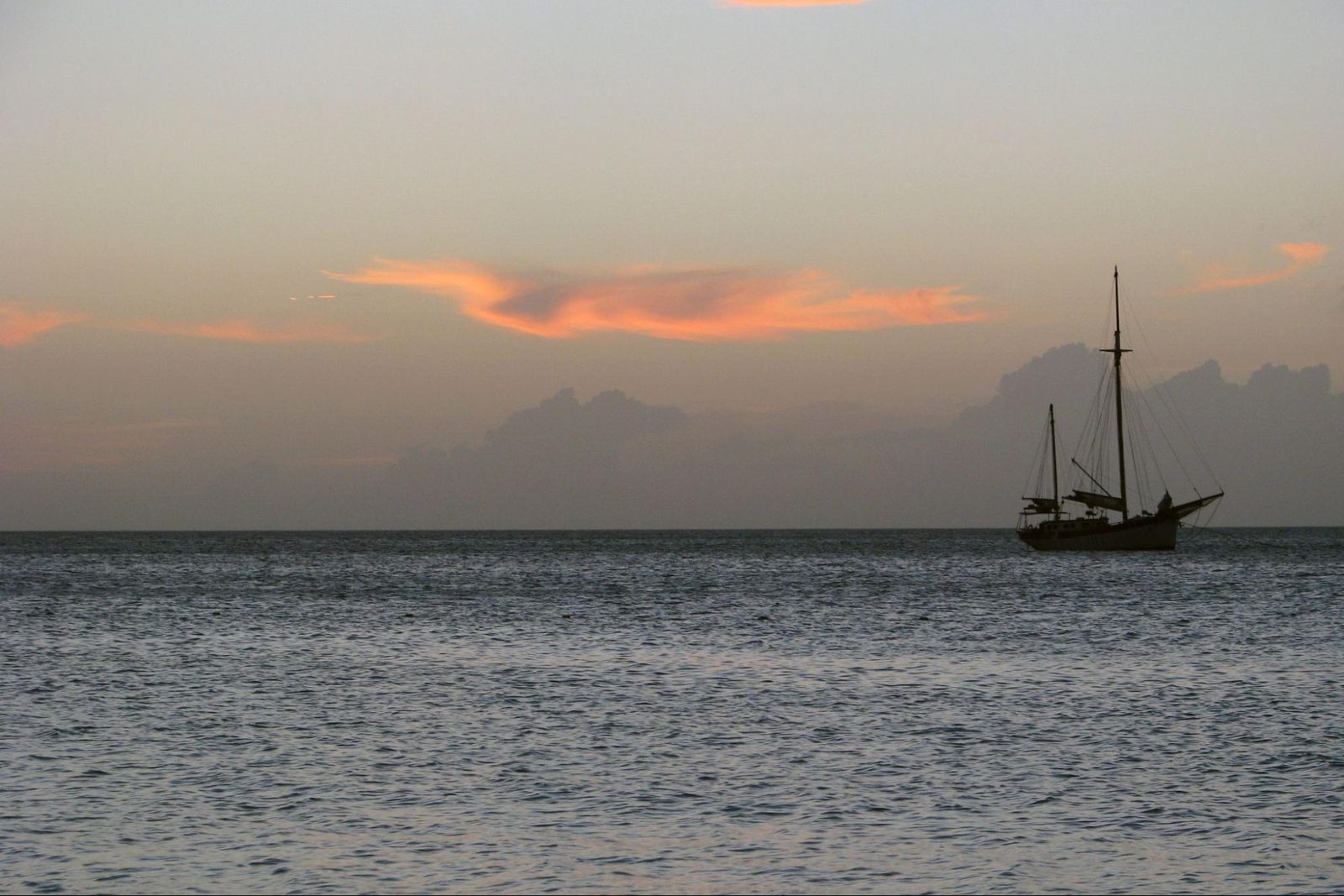
It is also worth keeping twilight in mind when planning activities around sunrise and sunset. Twilight is the period when the sky gradually brightens before sunrise or stays light after sunset, even though the sun itself is below the horizon. In Aruba, the show often improves once the sun has dropped out of sight, with the sky holding orange, pink, and gold for a while afterward. Civil twilight generally lasts another 20 to 25 minutes, though how strong the color gets depends on atmospheric conditions that day. The practical takeaway is that the move from daylight to dark is gradual rather than immediate, so there is no need to pack up the moment the sun disappears.
Under the right conditions, you might also catch the green flash, a brief green glint at the upper edge of the sun just as it slips below the horizon. It is an optical effect rather than a nightly occurrence, but it is worth watching for.
Oranjestad sun times
Close to the equator, Aruba's sunset moves only about an hour across the whole year, from about 6:10 p.m. in November to 7:10 p.m. in July.
| Month | Sunrise | Sunset |
|---|---|---|
| Jan | 7:06 a.m. | 6:34 p.m. |
| Feb | 7:02 a.m. | 6:46 p.m. |
| Mar | 6:48 a.m. | 6:50 p.m. |
| Apr | 6:28 a.m. | 6:52 p.m. |
| May | 6:16 a.m. | 6:58 p.m. |
| Jun | 6:15 a.m. | 7:06 p.m. |
| Jul | 6:23 a.m. | 7:10 p.m. |
| Aug | 6:29 a.m. | 7:00 p.m. |
| Sep | 6:30 a.m. | 6:41 p.m. |
| Oct | 6:30 a.m. | 6:21 p.m. |
| Nov | 6:38 a.m. | 6:11 p.m. |
| Dec | 6:54 a.m. | 6:17 p.m. |
Sunset dinner tip: aim to be seated 30 to 45 minutes before sunset, then check the exact time for your date when you book.
Reserve a sunset tableTimes for the 15th of each month in Oranjestad, rounded to the minute. Daily times shift by a few minutes.
These are planning figures rather than exact daily predictions. Sunrise and sunset shift by a few minutes from day to day, so check the date-specific time if you are planning an excursion, photography session, or sunset reservation.
Aruba sunsets are an important part of the island’s daily rhythm, and visitors plan whole evenings around them: sunset sails, beachfront dinners, cocktails at the water’s edge, engagement photographs, and even wedding ceremonies. If you want to watch the sun go down from a west-facing beach, restaurant, or viewpoint, avoid arriving at the last minute. Aim to be in position 30 to 45 minutes before sunset. That gives you time to settle in and enjoy the changing light before the sun reaches the horizon.
It is also important to remember that a “sunset dinner” needs more planning than simply booking somewhere for the evening. If seeing the sunset from your table is important, check the sunset time for your date and choose your reservation accordingly.
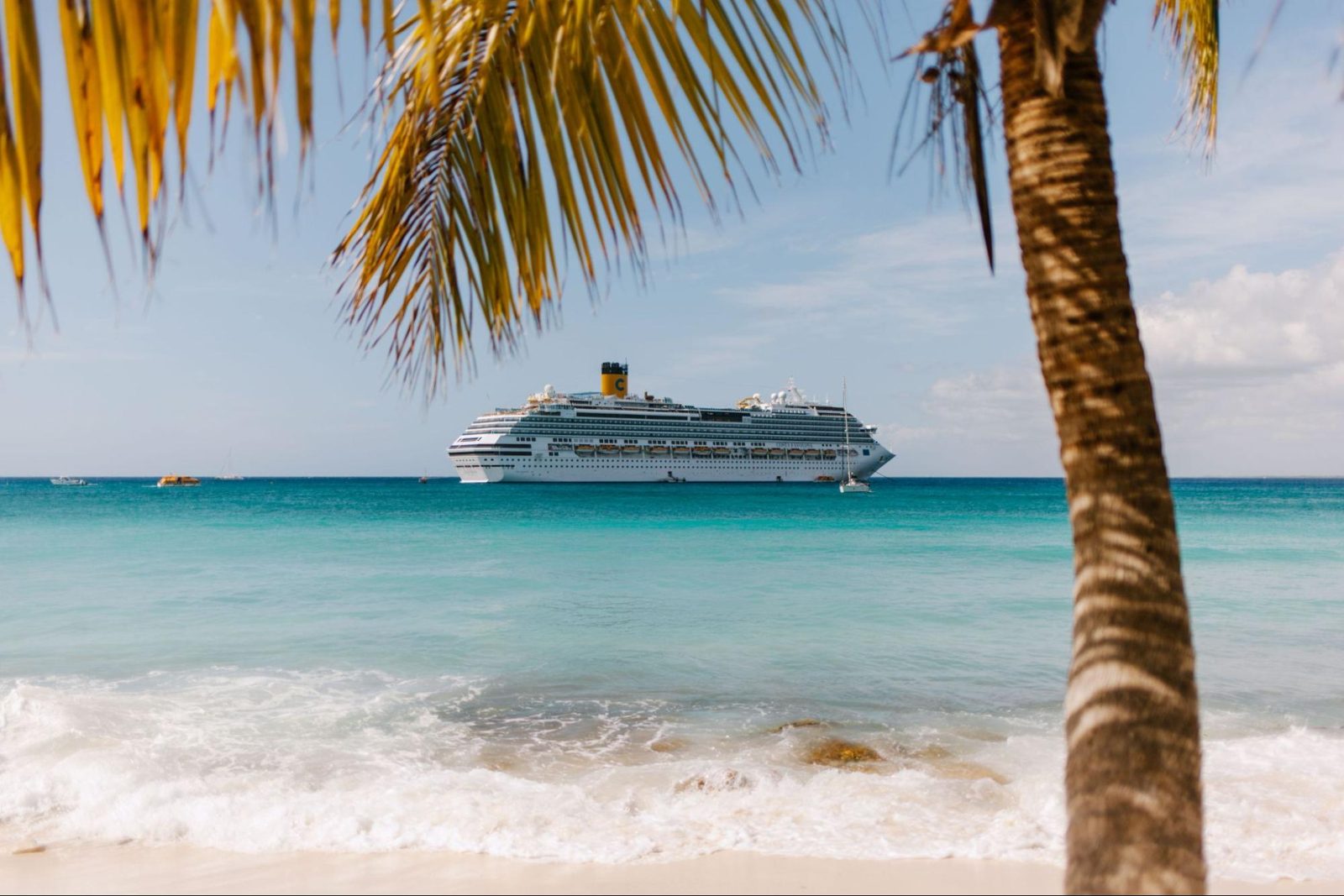
Cruise passengers have one extra timing issue to consider: ship time is not necessarily the same as Aruba time. Some cruise ships continue using the time of their departure port instead of changing their clocks to local time. This means your ship, your excursion operator, and your phone could potentially show different times.
The general rule of thumb is to follow the ship’s stated time for all-aboard and departure instructions. Check the daily program when you arrive and make sure you know which time your ship is using. The Aruba Ports Authority publishes cruise schedules, but individual ships can have their own operating schedules and procedures.
This matters particularly when booking an independent excursion. If a tour leaves at 12:30 p.m. island time and your ship is operating on a different clock, you need to know the difference before you leave the port. Cruise schedules can also change, so check the latest information rather than relying on an old itinerary.
There is no single opening schedule for every restaurant in Aruba. Hours depend on the location, type of restaurant, day of the week, and season. For example, Salt & Pepper in Palm Beach opens from 7:30 a.m. until midnight daily, making it an option for breakfast through late evening, while Fishes & More opens at 4:00 p.m. and focuses on dinner and drinks. In Oranjestad, Café the Plaza is open from 7:30 a.m. to 11:00 p.m. daily, while Que Pasa Restaurant & Winebar generally opens at 4:00 p.m., with earlier Sunday hours for brunch.
One detail that surprises visitors is the difference between restaurant closing time and kitchen closing time. A venue might remain open until 10:00 p.m., while its kitchen stops taking orders earlier. This is because the restaurant may keep its dining room or bar open for guests who are finishing their meals or enjoying drinks after the kitchen has closed. If you are planning a late dinner, it is therefore worth checking the kitchen's last-order time rather than relying only on the restaurant's listed closing time.
Dinner tends to become busier during the early to mid-evening, particularly in popular resort areas, and during busy travel periods. If you are traveling during a busy season or visiting during a cruise day, a reservation can make the evening easier.
Restaurants near Palm Beach and other popular dining areas may see more demand around the main dinner hours, so walk-in availability can vary from one evening to the next. It is also worth allowing extra time for your meal if you have evening plans, rather than scheduling another activity immediately afterward. Dining slightly earlier can give you more flexibility if you want to combine dinner with another activity, while a later meal may suit travelers who prefer a more relaxed evening.
Special-offer periods vary considerably between restaurants, so there is no single island-wide happy-hour time. Across the Aruba Wine & Dine restaurants alone, the published specials run like this:
Promotions change, so the Yummy Aruba specials page is the place to check what is running during your stay.
Some specials are tied to specific days or limited time windows, while others may be available only at certain bars, restaurants, or resort areas. Checking ahead can help you avoid arriving outside the promotion period and can also give you a better idea of whether the offer applies to drinks, food, or both.
Downtown Oranjestad can feel very different on a cruise-ship day. When ships arrive, passengers head into the downtown area, creating more activity around the port, shops, restaurants, and attractions. As the day moves toward departure, that traffic changes again.
The Aruba Ports Authority’s cruise ship schedules provide monthly arrival and departure information for cruise ships visiting the island. The authority notes that cruise schedules and berth assignments are strictly provisional and subject to change without prior notice, so travelers should check the latest schedule before planning activities around a cruise ship’s arrival or departure.
Business hours vary, but some general patterns can help with planning. Banks commonly operate during weekday daytime hours. Many bank branches open around 8:00 a.m., with closing hours varying by bank and branch.
Grocery stores generally offer longer hours. Aruba’s tourism information lists major supermarkets as generally operating from around 8:00 a.m. to 8:00 p.m. Monday through Saturday, with shorter Sunday hours. Super Food and Ling & Sons are the larger supermarkets, and both stock Dutch, European, Caribbean, and Latin American products alongside familiar American brands.
Prices are usually shown in Aruban florins, also called guilders, and U.S. dollars are widely accepted. Be ready for the size of the grocery bill. Most food on the island is imported and the shipping cost shows up on the shelf, so prices often run higher than visitors expect, particularly for familiar imported brands. There is locally grown produce, including hydroponic greens and vegetables, but much of what you will find comes from overseas.
Bring reusable bags, since Aruba has banned single-use plastic shopping bags. At some supermarkets a helper will bag your groceries and walk them out to your car, and a small tip is customary. Families traveling with babies should not assume their usual brand or type of formula will be on the shelf, so it is safer to bring enough of whatever your baby normally uses.
Aruba has a small local farming scene too, and cunucero is the Aruban word for farmer. The Santa Rosa Farmers Market in Piedra Plat and the San Nicolas Pop-Up Market at Plaza Lolita are two places to find locally grown produce. Market dates can vary, so check the current schedule before heading out.
Pharmacies can have more varied schedules. Many operate during regular daytime and early evening hours, but opening times differ between locations, and some reduce their hours on Sundays and public holidays. Aruba runs a rotating pharmacy-on-duty system called Botica na Warda, which covers evenings, Sundays, and public holidays, with the official schedule published by the Aruba Health Inspectorate. One thing to plan for is that a foreign prescription generally cannot simply be refilled at an Aruban pharmacy, and you may need to see a local doctor first. If you take regular medication, bring enough for the trip rather than assuming you can replace it on the island.
Shopping hours can be more variable. Some shops close for part of the day or remain closed on Sundays, while larger shopping and resort areas may operate later.
Sunday is a day when visitors should be especially careful about assuming that everything will be open. Some shops and businesses operate reduced hours or close completely, while restaurants and attractions may follow their normal schedules or use a modified timetable. Public holidays can also affect opening hours and include:
Some of these dates move from year to year, particularly Carnival Monday and the Christian holidays. If you have a specific shop, service, or restaurant in mind for a Sunday or public holiday, check its current opening hours before making plans.
Morning and afternoon excursions can offer very different experiences. Morning activities often appeal to travelers who want to start early and make the most of the cooler part of the day. They can also feel calmer, particularly at popular beaches, attractions, and outdoor sites before more visitors arrive and the day becomes busier. Starting early can mean less time waiting, quieter surroundings, and a more relaxed pace before afternoon activity levels increase.
Aruba’s trade winds are the thing to plan around. Mornings can offer calmer conditions for snorkeling, though that is never guaranteed, since sea conditions depend on the weather, the wind, and the specific location. Afternoon sailing can be just as enjoyable, and a sunset excursion is a different experience again.
Afternoon excursions can work well for visitors who prefer a slower start or want to leave time for breakfast, shopping, or another morning activity. The same principle applies to sunset experiences. Because Aruba’s sunset happens relatively early and stays fairly consistent throughout the year, an evening sail or other sunset activity needs to be planned around the exact date.
Aruba’s fixed time zone makes it relatively simple to coordinate with people back home once you know the current difference. For U.S. Eastern Time, remember that Aruba matches the clock during the U.S. daylight saving period and is one hour ahead during U.S. standard time.
If you work remotely or need to call family, double-check the time difference before setting a meeting. A one-hour mistake can be particularly inconvenient when a flight, tour, or airport transfer is involved. If you’re booking through a travel agent, confirm that all arrival, departure, and transfer times are listed in local Aruba time so nothing gets lost in translation.
For departing travelers, Aruba Airport currently recommends arriving three hours before a scheduled departure, with additional processing involved for U.S.-bound passengers because Aruba offers U.S. pre-clearance.
Knowing the time in Aruba is about more than just setting your watch. The island’s fixed UTC–4 clock, consistent sunset pattern, and distinct business rhythms can help you plan everything from an early excursion to a sunset dinner.
If you're planning to dine out more than once during your stay, a little preparation goes a long way. Make sure to check the exact time of sunset, confirm the restaurant's current hours, and leave enough room between activities so you're never rushing to a table. Sunset dinners in particular tend to fill up early, so it's worth deciding on your must-try spots before you land and booking the ones you can't miss.
That's where Yummy Aruba makes the planning easier. You can browse restaurants in one place, compare menus and cuisines, and shortlist your dinner options before your trip so you're not scrambling on the day. You can also stretch your dining budget with Yummy Aruba’s vouchers, which offer savings on meals across the island, and earn rewards on every meal when you join the Yummy Aruba Rewards App.
Traveling with friends or family? Yummy Aruba gift cards make it easy to treat someone to a sunset dinner of their own.
Aruba uses Atlantic Standard Time (AST), which is UTC–4. The island does not observe daylight saving time, so its clocks remain on the same time throughout the year.
No. Aruba stays on UTC–4 throughout the year. The difference between Aruba and other countries changes only when those countries change their clocks.
It depends on the season. During the U.S. daylight saving period, Aruba and New York have the same clock time. During U.S. standard time, Aruba is one hour ahead.
Sunset generally occurs in the early evening and varies by only a limited amount throughout the year. In Oranjestad, sunset is generally between roughly 6:10 and 7:10 pm., depending on the date.
Not as fast as you might think. Some of the best color arrives after the sun has gone, when the sky can hold orange, pink, and gold. Civil twilight generally runs another 20 to 25 minutes, though how vivid it gets depends on conditions that day. Use the exact sunset and twilight times for your dates if you are planning an outdoor activity around it.
Not necessarily. A cruise ship may maintain its own operating time rather than switching to Aruba’s local time. Always follow the ship’s stated time for all-aboard and departure instructions.
There is no single island-wide opening time. Breakfast venues may open early, while dinner restaurants often begin service later in the day. Kitchen closing times can also be earlier than the restaurant’s advertised closing time. Several restaurants also run early-bird dinner service in the late afternoon, which is worth knowing if you would rather eat ahead of the main dinner rush. For example, Fishes & More advertises a $32 early-bird dinner from 4:00 to 6:30 p.m., with the offer available all evening on Tuesdays. Salt & Pepper also serves early-bird dining from 4:00 to 6:30 p.m., and Kokoa has a three-course early-bird menu from 4:00 to 6:00 p.m. by reservation.
There is no universal happy-hour schedule. Promotional periods vary by restaurant and may change seasonally. Check the individual venue or current specials listing before planning around a particular offer.
