
Aruba’s official languages are Papiamento and Dutch. Papiamento is the everyday language most Arubans speak at home; Dutch is used in government, courts, and schools, and most locals also speak English and Spanish. Visitors can get by in English almost everywhere, especially in hotels, restaurants, and tour businesses.
In Aruba, you’ll hear four, sometimes five, languages in a single afternoon, and even in one conversation. But while you can easily navigate Aruba speaking only English, learning a few phrases in the other common languages can help you get more out of your trip. Here’s who speaks what, plus a few Papiamento words worth learning before you land. If you’re still sorting out the rest of your trip, the Aruba travel guide covers the basics.
Aruba has two official languages, Papiamento and Dutch.
Papiamento’s official status dates to 2003, when Aruba’s official languages ordinance named Papiamento and Dutch. Before that, official documents had been written only in Dutch for over 300 years.
The two languages split the work. Anyone can use either one when dealing with the government, but laws are written in Dutch, and Dutch is the language of the courts. This is because Aruba is a country within the Kingdom of the Netherlands and conducts legal matters as such.
Papiamento is a creole language spoken on Aruba, Bonaire, and Curaçao, with about 320,000 native speakers worldwide. It grew out of a Portuguese-based creole, and most of its vocabulary comes from Portuguese and Spanish, with most of the rest from Dutch.
The name links to the Portuguese verb papear, “to chat.” It’s a younger language — one of the oldest written documents in Papiamento is a letter from 1783, and the first Papiamento newspaper, Civilisado, appeared in 1871.
Aruba’s spelling is its own. Aruba writes Papiamento using an etymological spelling adopted in 1977, while Bonaire and Curaçao write Papiamentu with a phonetic spelling adopted in 1976. The differences are reflected in everyday words; for example, cunucu (countryside) in Aruba is spelled kunuku in Curaçao and Bonaire, reflecting the stronger Dutch influence on their spelling, including the use of the letter “K”.
You’ll spot it on signs, hear it in songs, and even find it on money. The first Aruban florin banknotes, issued in 1986, printed the central bank’s name in Papiamento: Banco Central di Aruba.
Papiamento is the main and native language of Aruba. In the 2020 census, Papiamento was one of the two most-spoken languages in about 81% of households. Here’s the breakdown:
2020 census
The two languages Aruban households speak most, by share of households.
In practice, most Arubans read, write, and speak at least four languages, and switching between them mid-conversation is normal.
Yes. English is widely understood across Aruba, and people working in hotels, restaurants, shops, and tours generally speak it well. It’s taught in schools from 4th grade, so most Arubans are able to comfortably converse in English. At restaurants in tourist areas, the menus are usually written in English, and the staff is largely fluent, so ordering is easy.
That said, widely understood isn’t the same as spoken fluently by everyone, so slow down a little outside the tourist areas.
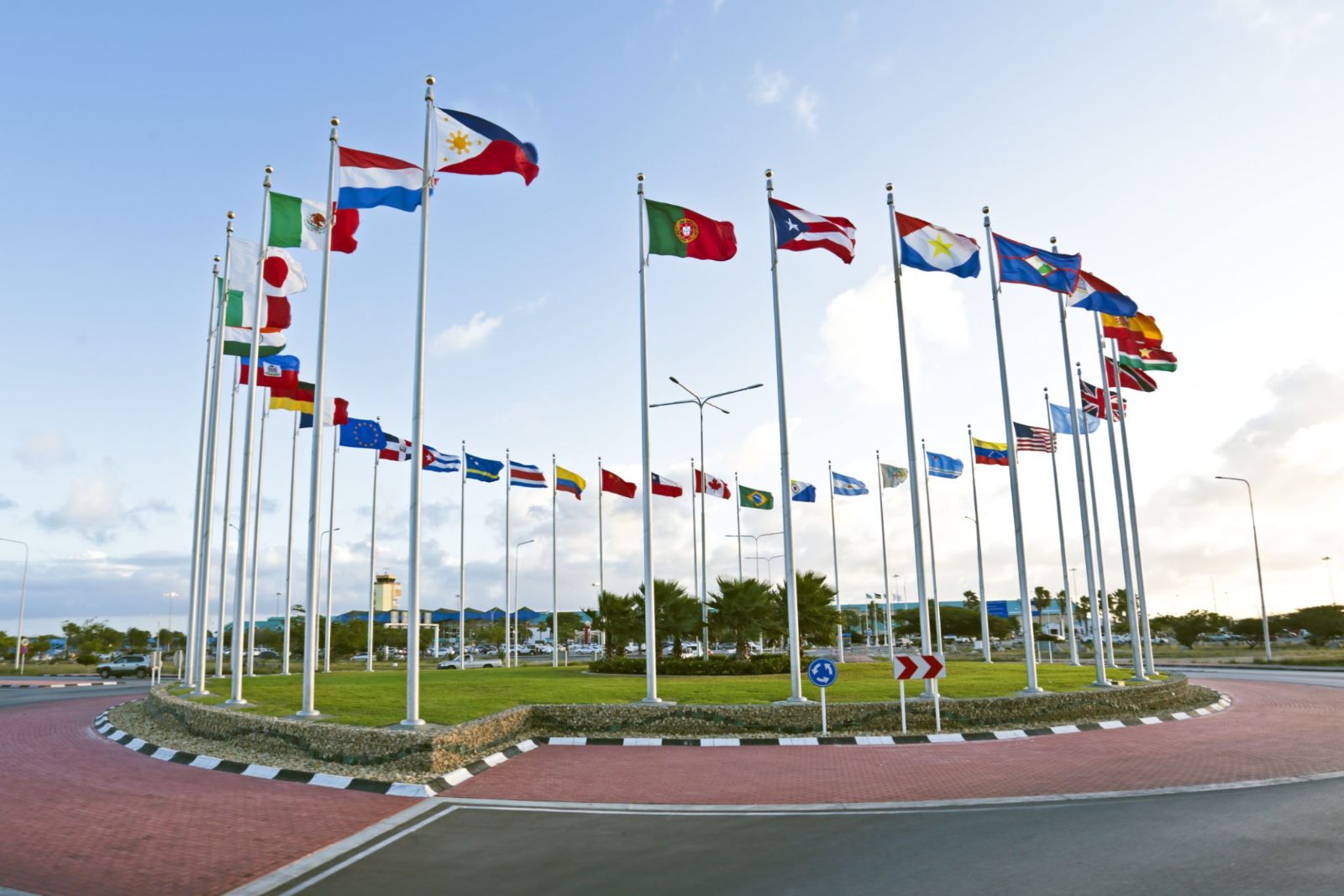
Spanish is widely spoken in Aruba. The 2020 census found that in 18.9% of Aruban households, it’s used alongside Papiamento, and schools begin teaching it from 5th grade. Much of that comes down to geography, since the island sits only a short distance off the coast of Venezuela.
Dutch is the language of government, law, and education, so you’ll see it on official signs and documents, though visitors rarely need it. If you speak Spanish, you also have a head start with Papiamento, because much of its vocabulary overlaps with Spanish.
Speaking to locals in their native language, even if just to say thanks, goes a long way in Aruba. Here’s a short, practical list, grouped by when you’ll use it.
Pocket phrasebook
Grouped by when you'll use them. A few words go a long way, and locals appreciate the effort.
Match the time of day: dia until about noon, tardi in the afternoon, nochi after dark.
At the table, the counter, or the end of a tour.
On your way out the door.
Arubans use dushi for almost anything they love.
Try your first danki at dinner, and tell your server the meal was hopi bon.
Bon bini is the first word most visitors learn. Yummy Aruba greets cruise guests with it, and it gives its name to the island’s culture festival, the Bon Bini Festival, a local culture night and the perfect place to hear the language in action. Check the schedule before planning, but if you’re in Aruba during the festival, you’re in for a treat.
Local dishes keep their Papiamento names, so knowing a few food words makes an Aruban menu easy to read.
You’ll likely see a few of these before you ever sit down to dinner. If you take a tour of the island, you may be able to enjoy fresh pastechi. If you find a delicious seafood restaurant, you’ll be able to try fresh, local fish that will dazzle. No matter where you dine, Aruba will delight you.
The best place to try your first danki is at a special dinner. Choose a restaurant where authentic local dishes and English-speaking staff come together, giving you the perfect opportunity to put these Papiamento phrases into practice.
Start with a simple greeting, thank your server with a danki or masha danki (thank you very much), or order the new fish special entirely in Papiamento. A few words can go a long way to connect you to the local culture and community. Don’t worry about getting everything perfect; locals appreciate the effort!
Book your table ahead of time so you can skip the wait, settle in, and enjoy an unforgettable evening filled with great food, warm hospitality, and a dash of Papiamento.
Arubans greet each other by time of day. Say bon dia (good morning) until about noon, bon tardi (good afternoon) in the afternoon, and bon nochi (good evening) after dark. To follow up, ask con ta bai? (how are you?), and expect mi ta bon (I’m well) in reply. Bon bini means welcome, and you’ll hear it the moment you land.
Partly. Most of Papiamento’s vocabulary comes from Portuguese and Spanish, so Spanish speakers often recognize words like por fabor (please) and pick up Papiamento faster than other visitors. It’s still its own language, though: a creole with its own grammar and most of its remaining vocabulary drawn from Dutch, not a Spanish dialect.
Dushi means sweet, and Arubans use it for almost anything they love: good food, a beautiful day, or a person. Mi dushi means my darling or sweetheart, and Aruba ta dushi means Aruba is lovely. It’s one of the most common Papiamento words visitors hear, so it’s an easy one to start using on your trip.
Bon bini is Papiamento for welcome. It greets visitors at the airport, on hotel signs, and at the start of tours, and many businesses use it as their standard hello. Reply with danki (thank you) or masha danki (thank you very much).
Mostly, with spelling differences. Papiamento is an official language on Aruba, Bonaire, and Curaçao, and speakers from each island understand one another. Aruba spells it Papiamento and uses an etymological spelling adopted in 1977, while Curaçao and Bonaire write Papiamentu with a phonetic spelling adopted in 1976. Many Aruban words end in o where the others end in u.
No. English is widely understood across Aruba, especially in hotels, restaurants, and tour businesses, so you can get through a trip without any Papiamento. Learning a few phrases is still worth it. A bon dia in the morning or a danki at the end of a meal is noticed and appreciated, and it takes five minutes to memorize the basics.
