
Bon bini na Aruba! Welcome to Aruba! If you’re planning your first trip, you’ve come to the right place. This guide brings together what our team has learned living, eating, and exploring here, with practical tips and local insight from people who call the island home.
Bon bini comes from Papiamento, one of Aruba’s two official languages alongside Dutch. Its root, papia, means to speak or talk, and you’ll hear it everywhere. Below, you’ll find how to prepare before you arrive, where to stay, how to get around, and what to do, plus a little more about the island’s history, its people, and the food that brings everyone to the table.
If this is your first time visiting Aruba, here are some quick facts to help you get your bearings and understand what the island has to offer before you start to plan your trip to paradise!
| At a glance | Quick Facts |
|---|---|
| Location | Southern Caribbean, around 18 miles (29km) north of Venezuela |
| Status | Constituent country of the Kingdom of the Netherlands |
| Capital | Oranjestad |
| Size | Around 20 miles long and 6 miles wide |
| Population | Approximately 109,435 |
| Languages | Dutch and Papiamento are the official languages, but both English and Spanish are widely spoken |
| Currency | Aruban Florin (AWG) is the official currency, but US Dollars are widely accepted |
| Time zone | Atlantic Standard Time (AST), UTC-4. Daylight saving time is not observed in Aruba |
| Airport | Queen Beatrix International Airport (AUA) |
| Average temperature | Low to mid-80s°F on average, with afternoon highs often near 90°F |
| Hurricane risk | Relatively low; Aruba lies on the southern fringe of the hurricane belt |
Aruba might be small, but there’s plenty you’ll want to consider when planning your first trip here. Now you know the basics; let’s take a look at what a trip to Aruba might actually look like!
Aruba sits in the southern Caribbean Sea, around 18 miles (29km) north of the coast of Venezuela. It is the westernmost of the iconic ABC islands (Aruba, Bonaire, and Curaçao) in the Lesser Antilles. It is a constituent country of the Kingdom of the Netherlands, rather than a U.S. territory or independent nation.
Its location is more southern than some of the other islands that sit in the Caribbean, and this conveniently puts Aruba outside of the main hurricane belt. This means the island has a much lower risk of hurricanes than many other popular destinations in the region. It also contributes to Aruba’s hot, dry, semi-arid climate, meaning the island sees relatively little rainfall and plenty of bright sunshine all year round!
For the majority of travelers, entering Aruba is relatively straightforward. You’ll need a valid passport, an approved online Embarkation and Disembarkation Card (simply known as an ED Card), and proof of your onward travel plans and accommodation. Aside from these details, visitors must also show evidence of sufficient funds for the duration of their stay.
The majority of visitors heading to Aruba generally do not require a visa; however, this depends on your nationality and corresponding visa requirements, so it’s always best to double-check before booking your trip.
You can complete your ED Card in the week before you travel, and there is only one official website: edcardaruba.aw. Other sites may offer to fill in the form for you for an extra fee, but you can complete it yourself in a few minutes. Air arrivals also pay the $20 Sustainability Fee through the ED Card system. Exemptions include residents of Aruba, children under eight, transit passengers staying less than 24 hours, aircraft and vessel crew on duty, and travelers re-entering within a year of their last visit.
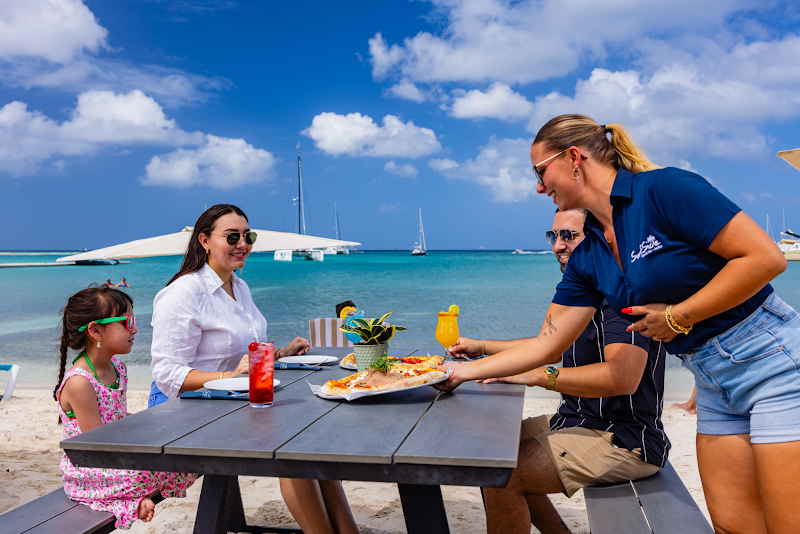
Image source: Surfside Beach Bar
Aruba is a small and compact island, with the majority of visitors opting to spend most of their stay along the developed west coast, where the water is calmer, and there’s plenty to see and do. The east coast is much less developed, with rough, rugged scenery and strong waves.
At the southernmost tip of the island is the stunning town of San Nicolas, popular for outdoor art murals and relaxed local living. Head north from there, and you’ll find many of the island’s other main areas, such as the capital of Oranjestad, which is bustling with history and culture, the low-rise corridor along Eagle Beach, and the high-rise strip along Palm Beach. The lively island gets quieter as you head further north, with Malmok and Arashi being some of the island's less touristy spots.
Because Aruba is only around 20 miles long, you can see a lot of the island even on a short trip. Driving times still vary with traffic, the time of day, and where you’re going, and some of the most rewarding spots, such as the rugged north coast and the Natural Pool, are reached on unpaved tracks that call for a guided 4x4 tour rather than a regular rental car.
Where to stay
Each area has its own pace. Pick the one that matches how much activity, quiet, or culture you want around you.
The island's biggest concentration of high-rise resorts, restaurants, bars, shops, and water sports.
A low-rise beachfront area with a wide beach, iconic fofoti trees, and less of a party atmosphere.
The capital, with colorful Dutch colonial architecture, museums, shopping, and the cruise port.
A quieter, residential north end with protected coves, beaches, and the California Lighthouse.
Staying somewhere already? See the best places to eat near you.
Browse restaurantsChoosing where to stay in Aruba really depends on what you’re hoping to get out of your trip, and how much activity, solitude, or culture you’re hoping to have surrounding you.
If you’re looking for somewhere high-energy with plenty of convenient dining and nightlife options right on the doorstep, then Palm Beach is a top choice. With the island’s largest concentration of restaurants, bars, shops, and hotels, it’s great for visitors looking to enjoy the vibrant hustle and bustle energy after dark.
For those looking to stay somewhere equally as popular, but with a more relaxed, cultural, downtown feel, Oranjestad is the best option. With rich character thanks to its iconic and colorful Dutch colonial architecture, plenty of local history, shopping, and easy access to the cruise port, it’s a practical choice with downtown, somewhat European vibes for anyone who enjoys being at the heart of all the action during the day. While it doesn’t have a resort-beach feel to it, it’s a unique escape popular with those in search of a more cultural spot to stay.
Eagle Beach is a gorgeous beachfront hotel area, albeit with a little less buzz than Palm Beach or Oranjestad. This makes it the perfect destination for those looking for a quieter, peaceful escape. With one of Aruba’s most famous beaches right on the doorstep, it’s an iconic spot for travelers looking to be closer to nature and enjoy strolls and iconic, breathtaking views. It has a lower-rise feel than Palm Beach. With a suitable amount of nightlife options without as much of the party atmosphere found in Palm Beach, it makes the perfect destination for families, couples, and those looking for a base on the island with more relaxed and peaceful surroundings.
For those looking to truly escape from it all, the North End boasts a great alternative destination. The areas of Malmok and Arashi are well suited to visitors in search of a secluded stay, with quiet beaches and a more residential feel. This relaxing area is off the beaten path for most travelers, and feels more like local living than an upscale resort getaway. If you plan on staying here, it’s a good idea to rent a car so you can seamlessly explore the rest of the island.
At the southern end of the island, San Nicolas offers something different again. It’s quieter and farther from the main resort areas, but it suits travelers looking for a cultural, artsy, nature-focused getaway, with murals, museums, and Caribbean food close by and Baby Beach just down the road. Secrets Baby Beach Aruba, which opened in 2025, has made the area a more practical base for visitors who want that slower pace. A rental car is a good idea if you stay here.
Aruba actually has relatively few true all-inclusive resorts, compared to the typical standard in the Caribbean. Instead, it boasts an independent, culturally rich dining scene that is one of the island’s major draws. There are plenty of pros and cons to each, but what style of stay you choose to have depends largely on what you want your island experience to look like.
An all-inclusive stay is a great choice for visitors traveling with young children, as it allows plenty of on-site fun and set costs for dining out, so you don’t need to worry about how much you’re spending. It’s also a great option for those looking for a relaxed on-site vacation, where you can soak up the sun and enjoy a laid-back escape without stressing about getting from A to B.
Independent dining, on the other hand, gives you the freedom to eat your way around the island. It allows you to indulge in the wide variety of culture and experience more of the island’s local character. However, this means budgeting separately for meals and planning where you’ll eat each day.
Many visitors choose to split the difference in Aruba. Instead of choosing an all-inclusive stay or completely independent dining, they opt to book resorts with just some meals included. This means they can plan to head out to restaurants to experience the rich cuisine the island has to offer, while not worrying about breaking the bank at every meal.
Getting around Aruba is straightforward. There are taxis, a public bus service, a free-to-ride tram in downtown Oranjestad, and rental cars for visitors who want to explore at their own pace. The Arubus service runs mainly along the west-coast corridor between Oranjestad and the hotel areas.
Taxis don’t use meters. Fares are set by the government and charged per taxi for up to four passengers, with a small surcharge on Sundays, holidays, and late at night. Rather than relying on estimates, check the current fare for your route on the official taxi fare site.
A regular rental car will get you to most of the island’s main sights, including Oranjestad, the west-coast beaches, the California Lighthouse, and San Nicolas. The Natural Pool and much of the north coast are different. They’re reached on rough, unpaved tracks, and most rental agreements don’t allow driving off paved roads, so a guided 4x4 excursion is the better choice there.
Aruba offers plenty to do, with a wide range of activities across the island. If you’re after a relaxing beach escape, the west coast is home to calm, swimmable beaches, many of them the ones you’ve seen on postcards.
Head inland to Arikok National Park, with rugged hills, caves, and dramatic coastline. A Conservation Day Pass costs $22 per adult, children under 17 enter free, and attendants at the caves may be available to help visitors. If you’d rather explore underwater, snorkeling is popular at the Antilla Shipwreck, a WWII German freighter and one of the island’s best-known dive sites. Jolly Pirates runs snorkel-and-swim sails from Hadicurari Pier on Palm Beach, and Kukoo Kunuku offers party-bus outings with hotel pickup, from happy-hour bar hops to a restaurant-hopping food tour.
For culture and history, spend time in Oranjestad’s historic center and in San Nicolas, both covered in more detail below. Few islands this size let you combine beach days, nature, history, and a serious food scene so easily.
Aruba’s story is older and more varied than many visitors expect, and much of it can still be seen on the island today.
The first known inhabitants were the Archaic people, who arrived by canoe from the South American mainland. Around A.D. 1000, the Caquetio people settled the island and established villages, and their rock drawings can still be seen at Fontein Cave in Arikok National Park and at the Ayo Rock Formation. The Spanish arrived in the early 1500s, and the Dutch took control in 1636. Apart from a short period of British rule in the early 1800s, Aruba has been part of the Dutch Kingdom ever since.
In the 19th century, the island’s economy turned on gold and aloe. Gold was discovered in 1824, and the ruins of the Bushiribana gold mill still stand on the north coast. Aloe arrived in 1840, and Aruba went on to become the world’s largest aloe exporter. In the 20th century, oil took over: the Lago refinery opened in San Nicolas in 1924 and operated until 1985. On January 1, 1986, Aruba gained Status Aparte, becoming an autonomous country within the Kingdom of the Netherlands.
You can trace this history in a day or two. Start at the free National Archaeological Museum in downtown Oranjestad and the Historical Museum inside Fort Zoutman, then visit the Bushiribana ruins, take the free factory and museum tour at Aruba Aloe in Hato, and finish at the museums in San Nicolas.
San Nicolas grew up around the Lago refinery. The jobs it offered drew workers and families from across the Caribbean and beyond, and their influence shaped the town’s food, music, languages, and traditions. Some residents still speak a local English Creole, and the town’s kitchens serve Caribbean dishes such as goat stew and oxtail soup alongside Aruban classics.
Today, more than 100 hand-painted murals make the town an open-air gallery, but they’re only part of its story. The Museum of Industry, in the town’s historic water tower, covers two centuries of Aruba’s industrial development, and the San Nicolas Community Museum in the restored Nicolaas Store focuses on the people who built the town. Check opening times before you go.

Carnival is a central part of Aruban identity. The season runs from early January until the day before Ash Wednesday, with street parties called jump-ups, Tumba and soca music competitions, lighting parades, and Grand Parades in both San Nicolas and Oranjestad. San Nicolas is the home of many of the traditions, including J’ouvert, the all-night “pajama party” that runs until sunrise.
The music reflects the island’s Caribbean connections, from calypso and soca to brass bands. Asambeho is a brass-band rhythm born in Aruba. Three San Nicolas musicians, Arnold Beyde, Samuel Hodge, and Alfonso “Bulto” Gibbs, created the style in the 1960s by blending samba, calypso, and marching-band rhythms, and it debuted in the 1967 Carnival parade. The Aruba Tourism Authority is now leading a revival, so listen for it if you visit during Carnival.
Oranjestad is the best place to see Aruba’s colonial architecture up close. Walk along Wilhelminastraat to see its restored Dutch-style buildings, then visit Fort Zoutman and the Willem III Tower beside it, home to the Historical Museum of Aruba. A walking tour is a good way to hear the stories behind the facades.
For many years, the Bon Bini Festival brought Aruban music, dance, food, and crafts to Fort Zoutman every Tuesday evening. The festival is currently on pause, so check the latest update before you plan around it.
Arubans appreciate visitors who try a few words of Papiamento. Almost every word is pronounced the way it’s spelled, so it’s easier than it looks. Here are some phrases to start with:
If you feel overwhelmed at the thought of trying the whole list, simply pick a couple of phrases to start with. As you practice and become more comfortable with your initial words, you might feel more confident and comfortable with adding a few more into your conversational rotation.
Aruba’s food reflects its history, with Dutch, Caribbean, and Latin American influences on the same table. Look beyond the international menus at the resorts and you’ll find dishes Aruban families have cooked for generations. Our recipes section and Aruba.com’s Autentico recipe collection are good places to start.
Pastechi is the island’s favorite snack and a popular breakfast: a fried turnover usually filled with spiced meat, though cheese and seafood fillings are just as common. Try a few, because every bakery has its own favorites.
Keshi yena is Aruba’s signature dish. Traditionally, a hollowed-out round of Edam or Gouda cheese is filled with spiced meat, raisins, and capers, then baked until the cheese melts. It’s a direct nod to the island’s Dutch heritage and a hearty meal after a day of exploring.
Pan bati is a soft, slightly sweet cornmeal pancake served alongside savory dishes, and funchi is a firm cornmeal side, similar to polenta, that comes with stews and fish. Pisca hasa cu funchi, fried fish with funchi, is one of the island’s most enduring dishes.
In Papiamento, sopi means soup, and you’ll see it on menus in many forms, from fish and chicken to pumpkin, goat, and oxtail. Stobas, or stews, are just as important. Cabrito stobá, goat slow-cooked with lime, tomato, garlic, and nutmeg, is traditionally served on Sundays and holidays.
San Nicolas is the place to taste the island’s wider Caribbean influences, with goat dishes and oxtail soup that reflect the families who arrived from other islands during the refinery years. A local favorite is Mama Brown’s Soup to Go, run by Sandra Brown, mother of Aruban baseball star Xander Bogaerts, where the soups change daily and often include goat and oxtail.
At the fishing center on Palm Beach, local fishermen bring their daily catch from the pier straight into the kitchen at Hadicurari, where tables sit right at the water’s edge. Upstairs, Nos Clubhuis is the fishermen’s own clubhouse, where visitors can share a meal and a sunset with locals.
Look out for the catch of the day, often wahoo, mahi-mahi, or red snapper. Local kitchens keep it simple so the fresh flavor comes through: fish is usually fried or grilled, served with funchi or pan bati, and paired with a spicy salsa made with local Madame Jeanette peppers.
Balashi is the island’s locally brewed beer, and the Aruba Ariba is its signature cocktail, made with rum, vodka, Coecoei liqueur, fruit juices, crème de banana, and grenadine. Order one at a beach bar at sunset and you’ll quickly understand why it’s so popular. You may also hear Arubans order a “Balashi cocktail,” which is simply a glass of the island’s clean tap water. The name comes from Balashi, the area where Aruba’s desalination plant is located, and it’s a small point of local pride.
Each part of the island has its own dining character. Palm Beach has the greatest density of restaurants, bars, and cafés, so it’s the easiest choice if you want plenty of options within walking distance. MooMba Beach puts you on the sand between the Holiday Inn and the Marriott, and Hadicurari and Nos Clubhuis bring the fishing-pier experience to the same stretch of beach.
Along the Druif and Eagle Beach area, beachside spots such as Matthew’s at Casa del Mar and Kokoa at Aruba Beach Club suit a slower meal at sunset. Closer to town, Surfside Beach Bar lets you watch planes come in on approach to the airport while you eat on the beach.
In Oranjestad, restaurants are woven into the historic center. Que Pasa has served diners since 1992 from a colorful historic merchant house on Wilhelminastraat, with an art gallery and a wine cellar to explore. Café the Plaza, at Renaissance Marketplace, has been part of the town’s social scene for more than 30 years, with live entertainment every day. After dinner, the streets are made for an evening stroll. Farther south, San Nicolas has local restaurants and food spots that many visitors never discover.
Aruba’s range of dining is part of the fun. At Zeerover in Savaneta, there’s no menu: you order the fresh catch and shrimp by weight, add pan bati and fried plantain, and eat at a picnic table on the water, with most plates in the $12 to $20 range. Neighborhood bakeries and food trucks are great value too. At the other end of the scale, chef’s tables and multi-course tasting dinners turn a meal into an occasion.
Happy hour is a useful budgeting tool as well as a drinks promotion, since many restaurants offer food deals alongside reduced-price drinks in the late afternoon. Lunch menus can also bring the same kitchen’s cooking in at a lower price than dinner.
Yummy Aruba’s specials calendar lists current promotions and set-price menus at our partner restaurants, including regular offers at Que Pasa and daily specials at Café the Plaza. You can also pick up vouchers or earn discounts through the Yummy Aruba rewards app.
If your dates line up, look out for Aruba’s culinary events. Autentico, the island’s culinary festival, includes Restaurant Week, when participating restaurants serve fixed-price menus, and The Pavilion, an open-air food and music party on Wilhelminastraat in Oranjestad. In 2026, the festival ran from October 3 to 11, so check the Autentico page for upcoming dates.
A few local habits are worth knowing. The kitchen often closes before the restaurant does, so check kitchen hours if you plan to eat late. Happy hour usually runs into sunset, which makes late afternoon a popular time for drinks before dinner. Many restaurants and beach bars are open on Sundays, though smaller local spots may keep shorter hours.
When the bill arrives, check whether a service charge has been added. Some restaurants include one automatically, while others, such as Que Pasa, Café the Plaza, and Surfside Beach Bar, don’t. If a service charge is already included, an extra tip is a thank-you for great service rather than an expectation. If it isn’t, tip as you would at home. During high season and on busy cruise-ship days, book ahead for the places you don’t want to miss.
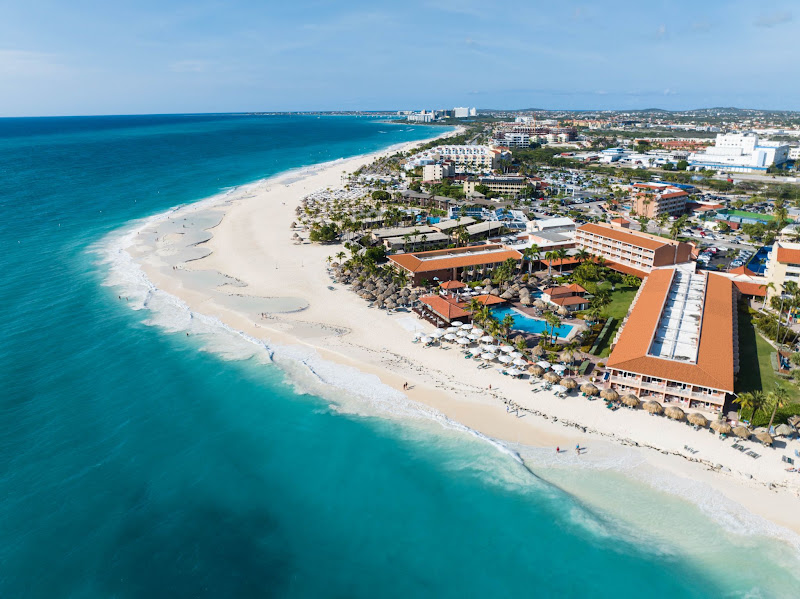
Image source: Kokoa Restaurant & Bar
Aruba asks visitors to take the Aruba Promise, traveling as guests of the island and helping protect its nature for future generations. In practice, it comes down to a few simple habits:
Aruba is a very safe destination, and the U.S. Department of State advises travelers to exercise normal precautions. Take the ordinary care you would anywhere: don’t leave valuables unattended on the beach or visible in a rental car, and keep passports and other important items in your room safe.
It’s also an easy island for families and first-time visitors to the Caribbean, with dependable warm weather, calm west-coast beaches, and English and Spanish widely spoken alongside Papiamento and Dutch.
Now that you’ve got all the basics covered, it’s time to start planning your dream trip to Aruba. Whether you’re still choosing where to stay or getting ready to book a restaurant for your first big night on the island, our curated list of local listings can help you take the next step in planning your Aruba island getaway.
Find out if there are any vouchers or gift cards you can use to keep costs down during your visit, and be sure to take a peek at our curated selection of restaurants and bars so you know exactly where to go. Our local experts sampled each and every one of them, so you can take our word for it on where the best spots are! You can also find out more about what we do here at Yummy Aruba and our We Care Initiative.
It depends on how you travel. Accommodation is usually the largest cost, while dining ranges from inexpensive local fish spots, bakeries, and food trucks to high-end chef’s tables. Happy hours, lunch menus, and set-price specials make it easy to eat well on almost any budget.
Five to seven days suits most visitors. That’s enough for several beach days, a day in Arikok National Park, an afternoon in Oranjestad, a trip south to San Nicolas, and some unscheduled time.
Yes. All air travelers need a valid passport, including US citizens; a birth certificate or driver's license is not sufficient. Your passport should be valid for your stay, with six months beyond your travel dates recommended. You will also need a completed ED Card.
There is no bad month. Average temperatures stay in the low to mid-80s°F year-round, and Aruba sits outside the main hurricane belt. What changes is cost and crowding. Mid-December to mid-April is busiest and priciest, late April through August offers the best balance of weather and value, and September through early December is quietest and cheapest.
Not for a resort-focused week with occasional taxis, and not for downtown Oranjestad, which is walkable. A car helps considerably for exploring beyond the hotel corridor. For the Natural Pool and the north coast, you need a 4x4 or a guided tour — a standard rental cannot make the trip, and most rental agreements prohibit unpaved roads.
Yes. Aruba is a very safe destination. Take ordinary precautions, such as not leaving valuables unattended on the beach or visible in a rental car, and check the U.S. State Department’s country page for current guidance before you travel.
Dutch and Papiamento are the official languages. Papiamento is a Creole blending Portuguese, Spanish, Dutch, English, and African influences, and it is what most Arubans speak day to day. English and Spanish are both widely spoken across the island, so visitors rarely encounter a language barrier in restaurants, shops, or hotels. A friendly “bon bini” (welcome) or “danki” (thank you) goes a long way.
Yes. The Aruban florin is the official currency, but US dollars are accepted almost everywhere, including hotels, restaurants, shops, and taxis, and credit cards are widely accepted. There is no need to exchange currency before traveling. Change is sometimes returned in florins, so it is worth carrying smaller bills.
It suits families unusually well. The west-coast beaches are calm and shallow, the main areas are close together, the weather is dependable, and English is widely spoken. Baby Beach near San Nicolas is the standard recommendation for small children, and most restaurants are comfortable with family dining.
It depends on what you want. Aruba's strengths are dependable dry weather, calm swimmable beaches, low hurricane risk, and an unusually good independent restaurant scene for an island its size. It is less suited to travelers seeking rainforest, mountains, or large-scale nightlife.
