
Eagle Beach is a public, white-sand beach on Aruba’s west coast, in front of the island’s low-rise hotels, just northwest of Oranjestad. It’s Aruba’s widest beach, with calm water, free public palapas, two famous fofoti trees, and important sea turtle nesting grounds. Tripadvisor ranked it the #1 beach in the Caribbean and #4 in the world for 2026.
If you’re planning to visit, here’s how to spend a full day at Eagle Beach without spending half of it looking for shade, a restroom, or somewhere to eat.
Eagle Beach stretches along J.E. Irausquin Boulevard, between Manchebo Beach to the south and Palm Beach approximately 1.5 miles to the north. It’s roughly 10 to 20 minutes by car from Queen Beatrix International Airport, depending on traffic.
You’ll find public parking near the beach, and Arubus services the hotel area. If you’re traveling from Oranjestad’s main bus station, take Line 10 towards the hotel and beach areas, and check the Arubus routes before setting off, as routes and departure times can change.
Eagle Beach is a good starting point for exploring Aruba’s western coastline, but there’s plenty more to discover around the island.
Eagle Beach is wider and generally quieter, with a spacious shoreline in front of low-rise hotels. Palm Beach is busier, with high-rise resorts, piers, water sports, beach bars, and plenty of activity.
Choose Eagle Beach if you want room to spread out, swim, and relax. Palm Beach is a better fit if you’d like more restaurants, water sports, and nightlife within easy walking distance.
You don’t necessarily have to choose one. Many visitors spend the day at Eagle Beach before heading north for sunset drinks or dinner at MooMba Beach, between the Holiday Inn and Marriott resorts. Its beachfront setting makes it a convenient place to carry on the evening after a day in the sun.
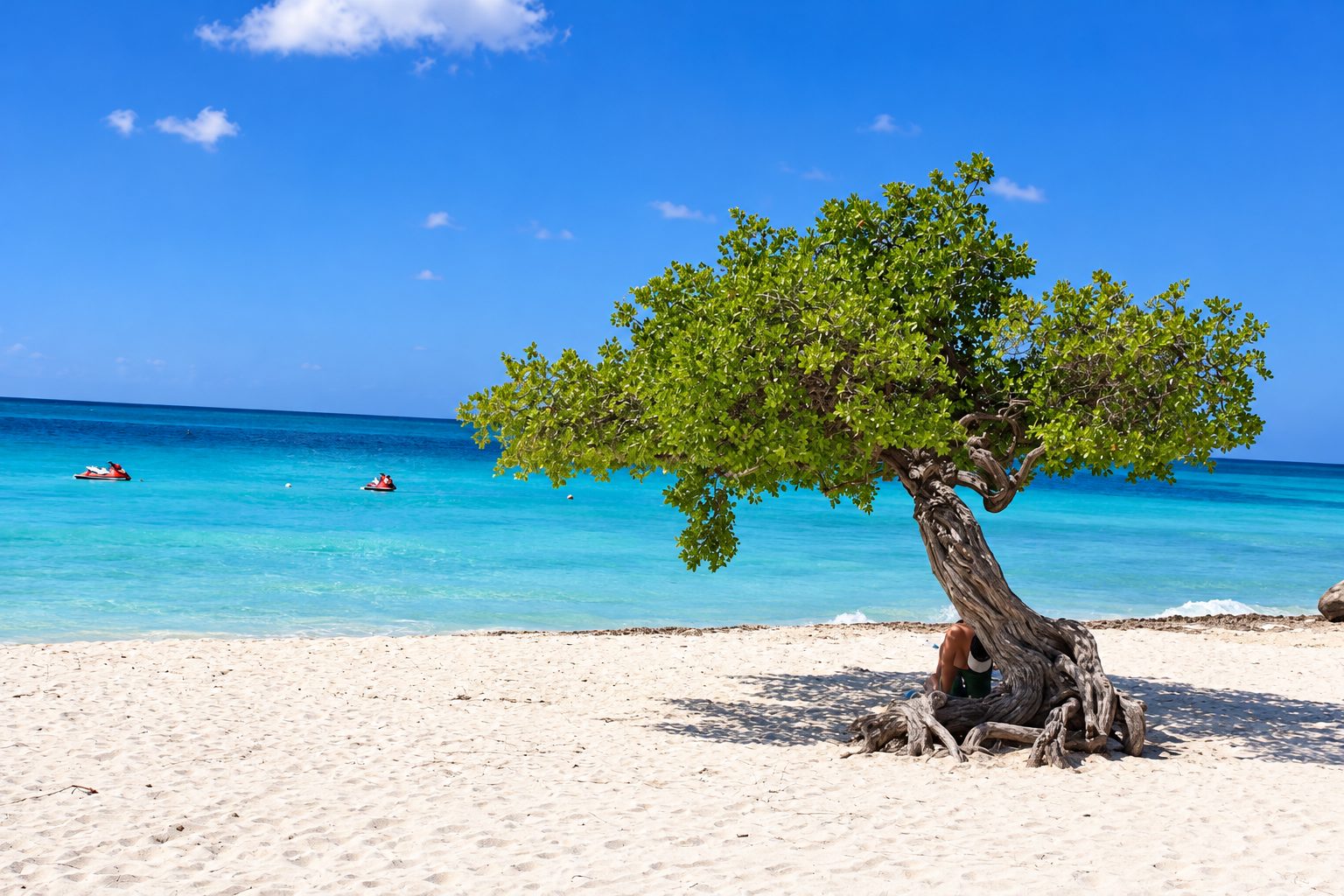
The two famous trees on Eagle Beach are fofoti trees, not divi-divi trees. Their curved trunks lean towards the Caribbean Sea, shaped by the island’s persistent trade winds.
It’s an easy mistake to make because both are symbols of the island and grow in distinctive wind-sculpted shapes. The main difference is where you’ll find them: fofoti trees (Conocarpus erectus, also known as buttonwood) grow along the coast, while divi-divi trees, also called watapana, turn up in many spots across the island’s drier landscape.
The famous lone trees you’ll see in photos on Eagle Beach, just across from Amsterdam Manor, are fofoti. Both fofoti and divi-divi trees lean towards the southwest, shaped by the northeast trade winds that blow across Aruba.
The pair on Eagle Beach has become a favorite photography spot, particularly at sunrise and sunset when the light is softer. Be patient if other visitors are taking photographs, and remember that these trees are part of Aruba’s natural environment. Avoid climbing them, damaging their branches, or hanging decorations and belongings from them.
The public palapas on Eagle Beach are free to use and generally operate on a first-come, first-served basis. Arriving early gives you a better chance of finding shade, particularly during busy holiday periods. Avoid reserving a palapa with towels or bags and leaving it empty for long stretches.
It’s also worth distinguishing public shade structures from hotel beach setups. Under Aruba’s 2026 beach guidelines, palapas, loungers, and umbrellas assigned to hotel guests are considered in use even when those guests step away for a swim or walk. Visitors who aren’t staying at the property shouldn’t use or move these setups.
You can also find chair, umbrella, and water sports rentals along the beach. If you’re staying in an Airbnb or villa, services such as Travel Light Aruba can arrange delivery of beach equipment, including chairs, umbrellas, coolers, and baby equipment, directly to your accommodation.
Public restroom facilities are limited, so plan ahead. Nearby bars, restaurants, and hotels have facilities for their customers and guests. At the southern end, M’s Crêpe Shack at Casa del Mar Beach Resort is a handy shop for coffee or a sweet or savory crêpe. It’s open Sunday through Friday, 8:00 AM to 4:00 PM, and closed on Saturdays according to its listed hours.
Yes, Eagle Beach is a lovely place for swimming, but it’s not particularly suited to snorkeling. The water is generally calm and clear, and the mostly sandy seabed makes it comfortable for a dip. However, there isn’t much reef close to shore to explore.
As with any beach, conditions can change with the wind and weather. Aruba’s beaches generally don’t have lifeguards, so keep an eye on children, avoid swimming alone, and be mindful of currents and changing conditions.
For better shore snorkeling, head to Boca Catalina or Malmok on the northwest coast, where you can find rocky areas and marine life. Another option is a snorkeling cruise with Jolly Pirates, which offers a different way to explore Aruba’s underwater scenery.
Families traveling with toddlers who need particularly shallow, sheltered water may prefer Baby Beach, in the south of the island. Its protected lagoon is better suited to gentle paddling.
Sea turtles nest in Aruba from March through September, and hatchlings emerge from May through November. Eagle Beach is one of the island’s main nesting beaches, especially for leatherbacks. Four species nest in Aruba: leatherback, green, hawksbill, and loggerhead.
If you visit during nesting season, you’re a guest in a nursery, so a few habits go a long way:
Sea turtle season
Turtles come ashore to nest from March through September, and hatchlings make their way to the sea from May through November.
Spot a turtle, a nest, or hatchlings?
Call Turtugaruba’s 24/7 hotline.
Sources: Aruba Tourism Authority, Turtugaruba
Follow these, and you’ll leave the beach just as you found it, with plenty of time left to enjoy everything else Eagle Beach has to offer.
Any time of year works, since Aruba’s weather is warm and sunny year-round. Go early in the morning for the best choice of palapas, or late in the afternoon for the sunset over the water.
If you’re wondering about specific months, October through January is Aruba’s short rainy season, but showers are usually brief and followed by sunshine, so beach days are rarely lost. The main differences are crowds and hotel rates in high season, which tend to climb from December through April, so booking your stay early helps.
The beach is busiest on high-season weekends and during Easter week, when local families traditionally camp on the sand. It’s a lovely tradition to witness, so give the campers plenty of room.
Beach tennis is part of Aruba’s beach culture too, and the island’s international tournament takes over nearby Bushiri Beach each November. If your visit lines up with it, it’s well worth stopping by to watch a few matches.
The sun sets over the water, and the fofoti trees are the classic frame. For a sunset dinner nearby, Kokoa’s beach setting at the Aruba Beach Club faces the sunset, with service until 11:00 PM.
Some of the closest beachside restaurants are at the southern end of Eagle Beach, along the neighboring Manchebo and Druif stretch of J.E. Irausquin Boulevard. You’ll find several options for everything from a relaxed lunch to a proper dinner by the water.
Here are a few options worth knowing about:
Eagle Beach, south to north
The closest beachside restaurants cluster at the southern end, on the Manchebo and Druif stretch. Palm Beach is about 1.5 miles north on the same road.
Schematic, not to scale. Pins below the road sit across J.E. Irausquin Blvd from the beach.
Aruba Beach Club · Pin 2
Beachfront tables that face the sunset, from morning coffee to a late dinner.
Casa del Mar Beach Resort · Pin 1
An extensive menu with beach views and regular food and drink specials.
Aruba Beach Club · Pin 2
Handcrafted pizza for an easy beach lunch without leaving the sand for long.
Casa del Mar Beach Resort · Pin 1
Coffee and sweet or savory crêpes made to order. Closed Saturdays.
Planning a beach-day lunch or sunset dinner?
A short drive north takes you to Arawak Garden on Palm Beach, across from the Barceló Resort. This restaurant complex brings several dining options together in one setting. Salt & Pepper is particularly worth considering if you’re in the mood for tapas, sangria, and a relaxed evening out.
Eagle Beach is lined with low-rise hotels, some directly on the sand and others just across J.E. Irausquin Boulevard. It’s a good area to consider if you prefer a quieter resort setting without being too far from restaurants and other attractions.
Properties on or near Eagle Beach include:
Just south of Eagle Beach, on the neighboring Manchebo and Druif stretch, you’ll find Casa del Mar Beach Resort and the Aruba Beach Club.
The key to enjoying a relaxing day on Eagle Beach is to arrive early to secure a palapa, spend the morning swimming in the clear water, and leave time for a walk along the shoreline to see the famous fofoti trees. When hunger strikes, head towards the southern end for lunch or stay for a sunset dinner by the sea.
Ready to make a reservation? Browse Yummy Aruba’s restaurant listings and reserve your table before you go.
Yes. Eagle Beach is a public beach, so there is no entrance fee and public parking is available. A few sections are designated for hotel guests, so stick to the public stretches and public palapas.
Yes. Eagle Beach has soft sand, plenty of room to spread out, and generally calm water, which makes it an easy beach day for families. There are no lifeguards, so keep a close eye on children. Bring your own shade or arrive early for a palapa, and if your toddlers need very shallow, sheltered water, Baby Beach on the south coast is worth the drive.
Public restrooms are limited along Eagle Beach. Most visitors use the facilities at nearby beach bars, restaurants, and hotels, which usually expect you to buy something. If you are spending the whole day, plan a lunch stop at one of the beachside restaurants at the south end of the beach so you have a table, shade, and a restroom in one place.
About 1.5 miles. Eagle Beach and Palm Beach are on the same road, J.E. Irausquin Boulevard, with Eagle Beach to the south in front of the low-rise hotels and Palm Beach to the north in front of the high-rises. The drive takes only a few minutes by car or taxi, so it is easy to spend the day on one and have dinner on the other.
Eagle Beach rarely feels crowded because it is so wide, especially compared with Palm Beach just to the north. The busiest times are high-season weekends and Easter week, when local families traditionally camp on the beach. Arrive early in the morning for the best choice of free palapas, which tend to be claimed first, and you will usually find plenty of space.
