
Thinking about booking an Airbnb in Aruba instead of a resort? You’re in good company. Statistics show that approximately 33% of visitors stayed in a vacation home in 2024. Guests paid an average of $282 for a vacation rental, about $70 less than the average hotel room, according to Aruba Tourism Authority figures published by the Government of Aruba in August 2025.
Noord, Palm Beach, Eagle Beach, Malmok, and Oranjestad are popular areas to consider. The trade-off is that you’ll get more space and a kitchen, but you’ll need to plan and prepare your meals, transportation, and daily activities yourself. Here’s what to know before booking.
Yes, vacation rentals are an established part of Aruba’s accommodation market, but the government has a more formal and regulatory system. A listing on a popular platform doesn’t automatically mean every individual property has all the necessary permissions.
In 2016, the Aruba Tourism Authority signed an agreement with Airbnb, which Airbnb described as its first partnership with a Caribbean nation. Since then, short-term vacation rentals (STVRs) have become a significant part of the island’s accommodation options. Their share keeps growing: alternative accommodations accounted for 39.1% of visitor nights in 2025, up from 36.7% in 2024, and the island has an estimated 5,500 to 6,000 vacation-rental units.
The government approved an action plan for registering and regulating vacation rentals in October 2026. Under the plan, existing rental properties must register, even if they already have permits. Registration opened in November 2026, and owners have until January 31, 2027, to register. After the cutoff, new rentals can’t open. Registration itself does not automatically legalize a property or guarantee permission to operate.
For travelers, the practical takeaway is simple: book through an established platform, check recent reviews, and choose a host who can answer questions about the property’s operating status and applicable taxes.
The type of accommodation that suits you best depends on what type of traveler you are. An Airbnb or vacation rental generally suits families, groups, and longer stays that need multiple bedrooms, a kitchen, and room to spread out. A resort is usually more convenient if you want beach access, housekeeping, restaurants, and services without organizing everything yourself.
Neither option is automatically cheaper. It depends on how many people are traveling, how long you’re staying, and what you expect from your accommodation.
Rental or resort?
Neither is automatically cheaper. It depends on your group size, how long you stay and what you expect from your accommodation.
| What matters | Vacation rental | Resort or hotel |
|---|---|---|
| Price | Often better value when shared by a group | Can cost more, especially for multiple rooms |
| Beach access | Depends on the property's location | Often close to the beach, sometimes beachfront |
| Food | Kitchen for groceries and self-catering | Restaurants, room service and other dining |
| Housekeeping | Usually limited or arranged separately | Generally included on a regular schedule |
| Getting around | A car may be useful or necessary | Some resort areas are walkable, with services nearby |
| Best for | PickFamilies, groups and longer stays, like a family of five in a three-bedroom villa | PickCouples and shorter trips that want everything close by |
Averages are 2024 figures from the Aruba Tourism Authority, not quotes for current bookings. Add cleaning fees and taxes before comparing.
For a family of five, a three-bedroom villa might make more sense than booking two hotel rooms. For a couple on a week-long getaway, however, a resort could offer better value once you factor in meals, transportation, and the convenience of having everything nearby.
A vacation rental can still come close to the resort experience. Coconut Rentals and Com4Rent rent beach chairs, umbrellas, coolers, and snorkeling equipment, and some rental companies deliver the gear to your accommodation and collect it afterward. Com4Rent also rents baby equipment, so families don’t have to travel with bulky gear.
If your rental doesn’t come with resort beach facilities, Surfside Beach near Oranjestad is an easy alternative. The water is calm and shallow, there’s natural shade and parking, and Surfside Beach Bar rents beach chairs and umbrellas. It also serves food and drinks throughout the day, including some of the island’s best brick-oven pizzas, so check the menu before you go.
Recent figures show guests paid an average of $282 per night for a short-term vacation rental in 2024, according to the 2025 Aruban government report. The average hotel room cost approximately $352 per night, or $70 more. These are historical averages, though, not guaranteed prices for current bookings.
Several factors influence what you’ll pay:
Remember to look beyond the advertised nightly rate when budgeting for an Airbnb in Aruba, as taxes and other accommodation-related charges can increase the total cost of your stay.
Aruba’s tourist levy is 12.5% for applicable short-term accommodation. A separate environmental levy of US$3 per night generally applies to hotels and other short-stay accommodation. Timeshare stays are charged a fixed fee per stay instead. These charges may appear separately on your bill, so check the listing’s breakdown.
There’s also a separate US$20 sustainability fee for eligible visitors arriving by air, payable through the online ED card process. This is an arrival fee, not a nightly accommodation charge. Children under eight and certain other categories of travelers are exempt.
Essentially, when comparing accommodation options, you should consider not only the final price but also what the location offers. Taxes and other charges can affect your total, while proximity to beaches, restaurants, and other attractions can influence how much you spend getting around.
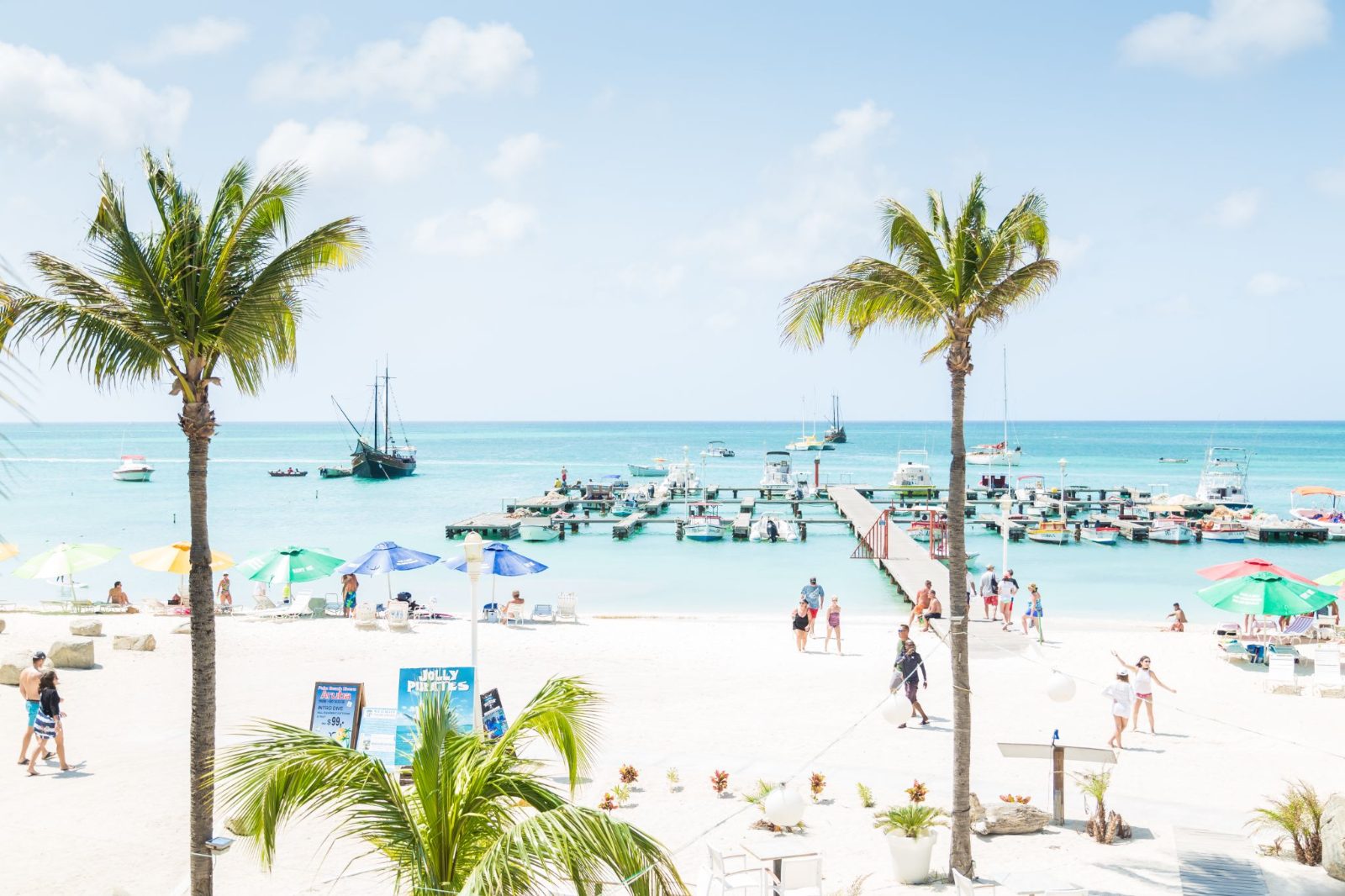
The right area depends on how you plan to spend your vacation. Some neighborhoods put restaurants and beaches within walking distance, while others offer more privacy and space but require a car. Here’s how each option plays out:
Where to rent
Some neighborhoods put dinner and the beach within walking distance. Others trade that for privacy and space, and a car.
Condos near the high-rise strip
Restaurants, shops and the beach are a short stroll from most condos on the strip.
Eat nearby: MooMba Beach, right on the sand between the Holiday Inn and the Marriott
Quieter, low-rise condos
The quieter, low-rise side of the resort area, still close to the beach.
Eat nearby: Kokoa at the Aruba Beach Club, with takeout and beach seating
Private villas
Villas near some of the island's best-known shore snorkeling spots, with more privacy and space.
Eat nearby: plan on driving to most restaurants. Browse restaurants
Apartments in town
Walking distance to the cruise terminal and downtown restaurants.
Eat nearby: Café the Plaza
Homes in local neighborhoods
Local south-coast neighborhoods near Mangel Halto and Baby Beach, including adults-only overwater villas in Savaneta.
Staying in a rental? Book your nights out ahead.
Once you’ve settled on an area, the next decision is what kind of property to book. Aruba has everything from private pool villas to resort-style condos and timeshare rentals, each with its own advantages.
Not all Aruba vacation rentals look the same. Before booking, decide what kind of accommodation makes sense for your group.
Your choice of property also affects how you’ll get around the island. A condo near Palm Beach puts restaurants and shops within walking distance, while a private villa further inland may make having a rental car much more practical.
Not necessarily. If you’re staying in Noord, Palm Beach, or central Oranjestad, you can manage without a rental car if your accommodation is within walking distance of the places you plan to visit.
Having a rental car can make your trip more convenient, no matter where you stay, especially if you plan to explore different parts of the island. It gives you more flexibility for supermarket trips, beach-hopping, restaurant visits, and getting back to your accommodation after a day out. While some resort areas are walkable, a car makes it easier to discover quieter beaches, local neighborhoods, and attractions farther afield.
For shorter trips, a bicycle is another option. Aruba Active Vacations rents cruisers, mountain bikes, and e-bikes by the day, with delivery available in the high-rise and low-rise hotel areas.
There’s another option if you don’t want to drive anywhere: organized tours with pickup. Kukoo Kunuku offers tours with pickup from hotels and most vacation-rental locations, subject to confirmation, making it easier to explore without arranging your own transportation for every outing.
Before booking, confirm the pickup arrangements for your specific property.
One of the biggest advantages of renting a house or apartment is having your own kitchen. But that doesn’t mean you need to spend your entire vacation cooking. Most vacation-rental guests settle into a combination of grocery shopping, restaurant takeout, and meals out.
Start with a supermarket visit after checking in. Stock up on breakfast essentials, snacks, drinks, and anything you’ll want available at the house. This is particularly useful for families and groups who don’t want to eat every meal at a restaurant.
For lunch and dinner, take advantage of Aruba’s restaurant scene. Many establishments offer takeout, and some beach restaurants make it easy to combine a meal with a day by the water.
And if you’re planning a special evening, Indulge Catering is an option worth considering, as it offers full-service catering for private events, including a special dinner served at your villa, so your group can enjoy a chef-prepared meal without leaving the house. Having a kitchen is convenient. Having someone else take care of dinner occasionally is even better.
A little research before booking can save you considerable frustration when you arrive. Use this checklist before paying for your accommodation:
Finally, pay attention to how the host communicates. Clear answers to straightforward questions are a good sign that you’ll know what to expect when you arrive.
Choosing a vacation rental gives you flexibility, but planning the rest of your vacation is just as important. From finding restaurants near your accommodation to arranging takeout or a private catered dinner, a little preparation makes your stay easier.
Start planning where you’ll eat by using our reservation service to organize a memorable meal.
Whether you choose a private villa, a beachfront condo, or a resort, there’s plenty to discover beyond your accommodation.
Usually, yes, per night. The Aruba Tourism Authority reported that guests paid an average of $282 a night for a vacation rental in 2024, while the average hotel room cost about $70 more. Rentals can save even more for groups and families who split one property and cook some meals, though cleaning fees and taxes can narrow the gap.
Yes. Aruba levies a 12.5% tourist tax on room nights, and the Aruba Tourism Authority estimates that 60 to 70 million florins in tourist tax goes uncollected from vacation rentals each year, which is part of why the government is now requiring rentals to register. Check whether a listing’s price includes taxes before you book. Separately, most visitors aged 8 and older who arrive by air pay Aruba’s $20 sustainability fee when completing the online ED card.
Yes. Many condos, apartments, and villas offer weekly and monthly rates, and you’ll find more choice and better prices outside December through April, the busiest rental months. Monthly stays work best with a kitchen and a car, since you’ll be grocery shopping and getting around like a resident. Confirm what’s included, such as utilities and cleaning, before you commit.
Yes, but true beachfront listings are limited. Most are condos and timeshare units in the Palm Beach and Eagle Beach resort areas, where the public beach is steps away. Many villas advertised as near the beach are actually across the road or a short drive away, so check the map pin and ask how long the walk to the water takes.
Aruba is considered a safe island, and vacation rentals are a mainstream choice: about a third of visitors stayed in one in 2024. Book through a platform with payment protection, read recent reviews, confirm the exact address before you arrive, and never wire money to a host directly. Lock up valuables as you would anywhere.
