If you've snorkeled the Antilla, you've probably heard the story of how her captain deliberately sank the German freighter rather than surrender it during World War II.
But after hearing that story so many times, I realized there was one question I'd never really asked:
What was a German freighter doing off the coast of Malmok in the first place?
Curious to learn more, I started digging into the Antilla's history and discovered that the story begins thousands of miles away in Galveston, Texas.
After loading a cargo of sulfur in Galveston, the SS Antilla was trying to return to Germany when World War II broke out in Europe.
With the Atlantic becoming increasingly dangerous, Captain Ferdinand Schmidt steered toward neutral Dutch Aruba, hoping to ride out the war.
Instead, the Antilla and her crew became stranded off the coast of Malmok, living aboard the freighter for more than eight months while they waited for the war to change.
It didn't.
When German forces invaded the Netherlands in May 1940, the situation in Aruba changed quickly.
Dutch authorities moved to seize the German ship. Rather than surrender the Antilla, Captain Schmidt ordered the sea valves opened.
The freighter sank just off Aruba's northwest coast.
More than eight decades later, she is still there.
Time and the Caribbean Sea have transformed the Antilla.
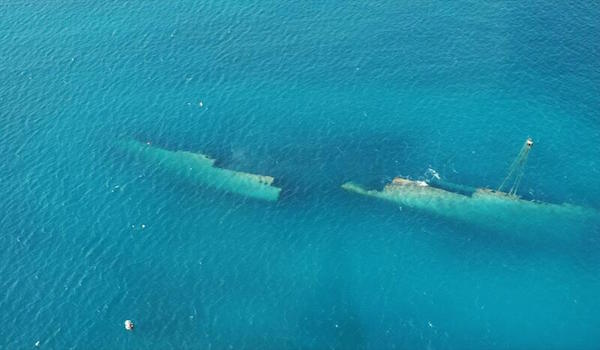
The nearly 400-foot wreck has become an enormous underwater habitat, with coral and marine life living in and around its structure. Depending on conditions, snorkelers may see schools of tropical fish and other sea life moving around the wreck.
Parts of the ship can be visible from the surface, which is one of the things that makes snorkeling above the Antilla so unusual. You don't have to dive down to understand its enormous scale.
Yes. The Antilla is one of Aruba's best-known snorkeling and diving sites.
But it is very different from snorkeling a shallow reef. The wreck sits in open water, so wind, waves, current and visibility can vary from day to day.
Your swimming ability and comfort in open water matter. Ask the crew what conditions are like that day before deciding whether to enter the water.
And there is nothing wrong with staying aboard. The Antilla can still be an extraordinary stop from the deck of the ship.
If you're deciding whether snorkeling in Aruba is right for you, our Snorkeling in Aruba: Swim with the Locals guide covers what to expect, swimming ability, getting in and out of the water, marine life and practical tips for enjoying your time in the sea.
Different parts of the wreck sit at different depths. Portions of the Antilla lie relatively close to the surface, while other sections extend much deeper.
That's one reason the wreck can be experienced in two very different ways: snorkelers can look down on its enormous structure from the surface, while scuba divers can explore it at greater depth.
Morning is generally our preferred time to visit.
Conditions are often calmer earlier in the day, and when the sun is high enough and visibility cooperates, its light helps reveal the wreck beneath the surface.
No two visits are exactly alike. The sea ultimately decides what you'll see.
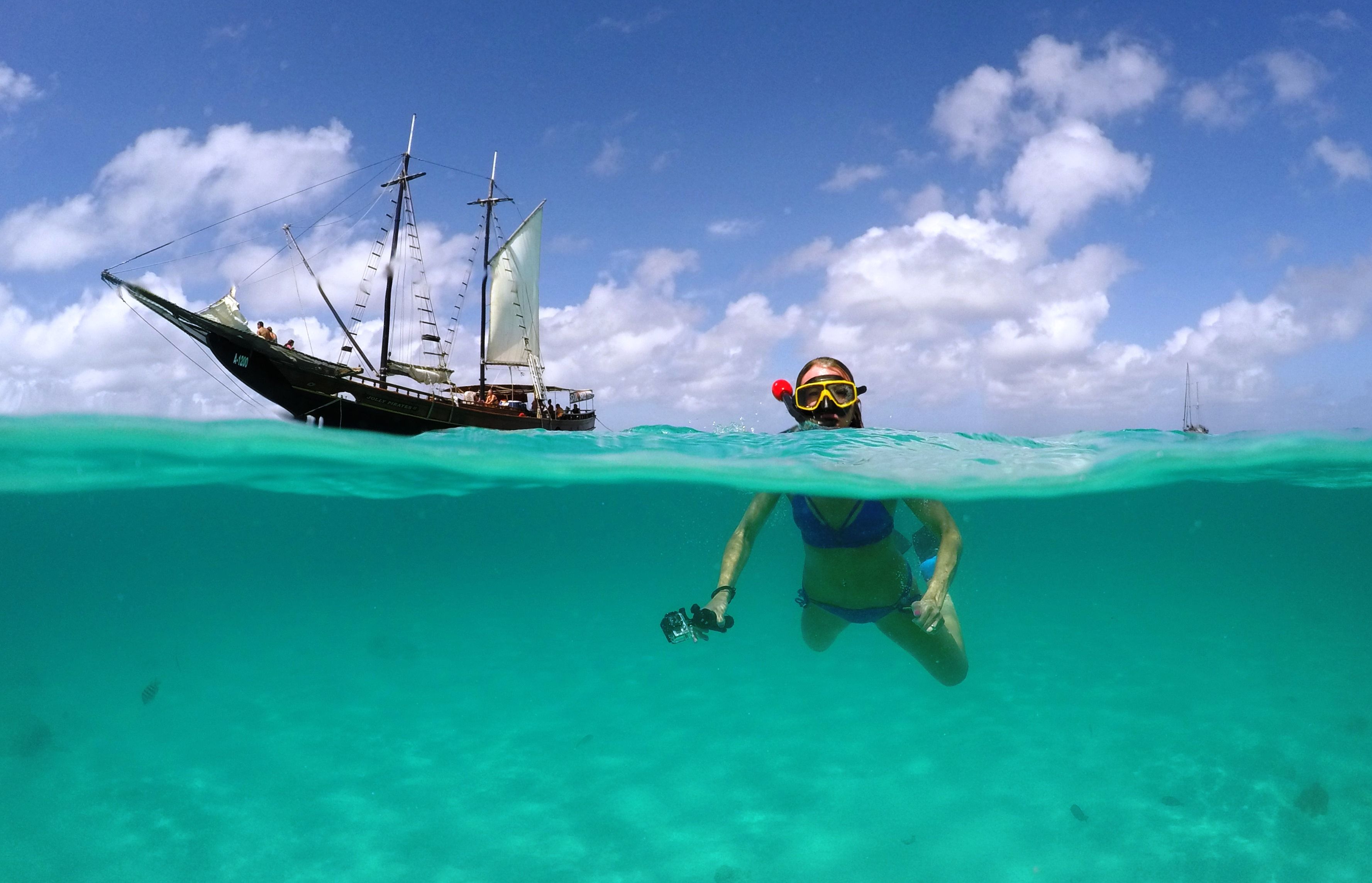
Jolly Pirates has been bringing guests to the Antilla since 1997.
After all these years, what fascinates me most isn't simply that there's a shipwreck beneath the water. It's how much history is sitting right there below you.
Thousands of miles from Galveston, a German freighter that sought refuge in neutral Aruba became part of the island's World War II history.
Today, people from around the world float above it with masks and snorkels.
That's quite a journey for one ship.
The Antilla lies just offshore from Aruba's northwest coast near Malmok. It is reached by boat and is a popular stop on snorkeling and diving excursions.
The Antilla was nearly 400 feet long, which helps explain why the wreck remains such an impressive sight beneath the water.
No. The Antilla is also a popular snorkeling site. Depending on visibility and sea conditions, snorkelers can see portions of the wreck from the surface.
The Antilla is an open-water snorkeling stop, and conditions vary. Beginners should speak with the crew about the day's conditions and their swimming ability before entering the water.
Staying aboard is always an option.
Marine life varies, but the wreck provides habitat for coral and many species of Caribbean fish. Other marine animals may also be seen around the site.
Yes. Boat excursions are one of the most popular ways to reach the Antilla. Jolly Pirates visits the wreck on its Morning Sail, Snorkel, Swim & Swing.
The Antilla has been part of the Jolly Pirates story since we began sailing in 1997.
Our Morning Sail, Snorkel, Swim & Swing takes guests out along Aruba's northwest coastline for snorkeling, sailing, the Antilla and, of course, our rope swing.
Explore the Jolly Pirates Morning Snorkel Sail
Carla Cavallaro
Brand Manager, Jolly Pirates & Kukoo Kunuku | Creator of Taste of San Nicolas
Carla Cavallaro has called Aruba home since 1989 and helped launch Jolly Pirates in 1997. She works with Jolly Pirates and Kukoo Kunuku and contributes stories to Yummy Aruba, part of Aruba Wine and Dine, sharing Aruba's history, people, sea life and the stories behind the places visitors experience today.
Read more of her stories at Jolly Pirates and Kukoo Kunuku.